Water Damage Restoration in Phoenix, AZ
Burst pipe, slab leak, or monsoon water coming in under the door? Shut off what you can, then call. We put you through to an independent Phoenix restoration company that can come out, find where the water went, and start drying. The call is free and you don't have to hire anyone.
- Free call, no forms to fill out
- You talk to the company first and decide whether to hire them
- Ask any company for its Arizona ROC license before work starts
- Phoenix, Mesa, Scottsdale, Chandler, Gilbert and Tempe
The first 15 minutes
Do these four things in this order. Everything else can wait until someone is on the way.
- Shut off the waterClose the valve behind the fixture, or the main. It's usually in a ground box near the street or where the pipe comes up beside the house.
- Cut power if water is near outletsTurn off that room's breaker, but only if you can reach the panel without standing in water.
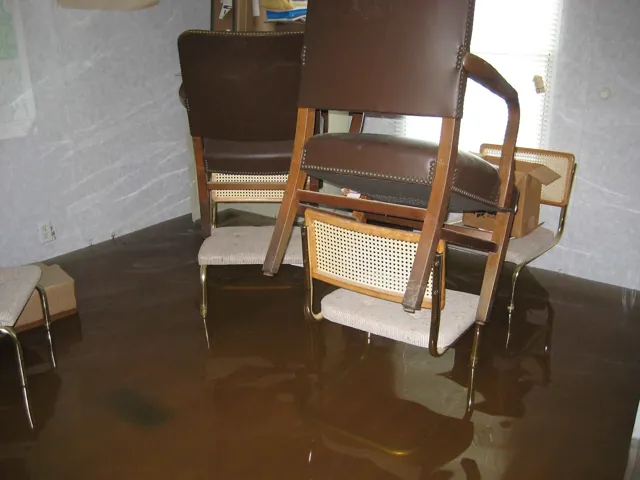
- Take photos before moving thingsWide shots of each wet room, the source, and the water line on walls and furniture. Your insurer will ask.
- Call for extraction and dryingCall (602) 652-3550 and we'll connect you with a local restoration company that can come out.
What's going on at your place?
Most water damage in the Valley starts with one of these six things. Knowing which one helps the restoration company show up with the right gear.
Burst supply line
The braided hose under a sink, toilet or fridge lets go. The rubber inside those lines ages fast in our heat. Close the little valve behind the fixture, or the main shutoff, before you do anything else.
Slab leak
Most Phoenix houses sit on a concrete slab with copper or PEX running underneath. When a pipe springs a pinhole down there, water comes up through tile seams and soaks baseboards from below. We have a longer guide on signs of a slab leak in a Phoenix home.
Water heater
Tanks in the garage or a hall closet rust through at the bottom after enough years of hard water. Sometimes it's a slow puddle. Sometimes it's 40 or 50 gallons at once.
AC condensate line
Your air handler pulls a lot of water out of the air in summer. If the drain line clogs, the pan overflows and you get a brown ring on the ceiling under the attic unit, usually in July.
Monsoon roof leak
Flat roofs with parapet walls depend on scuppers to drain. One clogged scupper during a storm and water backs up under the roofing and into the ceiling. We have a longer guide on what to do after monsoon flooding in a Phoenix home.
Swamp cooler overflow
A stuck float valve on a rooftop cooler can run water all day. It finds its way down the duct or the roof deck, and you notice it as a stain or a sagging ceiling.
While you wait for the crew
Once the water is off and the power to wet rooms is off, a few small things help.
- Get rugs, boxes, electronics and wood furniture off the wet floor. Slip foil or plastic lids under furniture legs you can't move so they don't stain the carpet.
- Mop or towel up what you can on hard floors, if the water came from a clean source like a supply line (see the table below).
- Keep kids and pets out of the wet rooms, and stay out from under any ceiling that's sagging.
- Write down when you found it and what you did. It helps with the claim later.
Clean water, gray water or sewage? It changes what you should do
Restoration crews sort water into three categories. You don't need the jargon, but you do need to know which kind is on your floor, because it decides whether it's safe to run fans or touch anything.
| Where it came from | What it means for you right now | What usually happens to carpet and drywall |
|---|---|---|
| Supply line, water heater, ice maker, fire sprinkler | Clean water. Mop, towel and move things. A fan on a hard floor is fine. | Carpet and even pad can often be dried in place if work starts within a day or two. |
| Washer or dishwasher drain, toilet overflow with no waste in it | Gray water. Wear gloves, keep kids and pets off it, and don't point fans at it until it's cleaned. | Pad is usually replaced. Surfaces get cleaned and sanitized before drying. |
| Sewage backup, toilet with waste, monsoon flood water from outside | Contaminated. Stay off it. Don't run fans or the AC, and don't try a shop vac. This needs flood cleanup by a crew in protective gear. | Carpet and pad go out. The bottom of the drywall is usually cut away. |
One catch: clean water doesn't stay clean. After a couple of days sitting in carpet in a warm house, it gets treated like gray water. Sewage is covered in more detail on our biohazard cleanup page.
Photos to take before anything gets moved
Adjusters see a lot of claims where the only pictures were taken after the cleanup. Five minutes with your phone now can save you an argument later.
- A wide shot of each wet room from the doorway, then closer shots of the floor, the base of the walls and any ceiling stain.
- The source: the split hose, the rusted tank, the overflowing pan. Keep the broken part in a bag. Insurers sometimes ask for it.
- Water lines on walls, cabinets and furniture legs, so the height is on record.
- Damaged items, with the brand or model label showing on electronics and appliances.
- A note on your phone with the time you found it and what you did, like when you shut the water off.
Insurance, the short version
Most homeowners policies pay for sudden water damage, like a burst line, and many exclude slow leaks and outside flood water. Policies also usually expect you to take reasonable steps to stop more damage, so getting the drying started doesn't have to wait for the adjuster. Call your insurer, get a claim number, and keep every receipt. Don't sign anything you haven't read, including an assignment of benefits form.
Why water damage acts differently in Phoenix
People figure that with humidity in the single digits half the year, anything wet will just dry on its own. The surface does. The carpet feels dry by evening. But water that got under baseboards, into the bottom of drywall or under laminate stays there, and that's where the smell and the mold come from a few weeks later.
Our water is hard. The minerals wear on copper pipes, water heater tanks and the fittings on every supply line. That's a big reason pinhole leaks and slab leaks are so common here, especially in houses built in the 1970s and 1980s.
Then there's monsoon season. A storm can drop an inch of rain in under an hour. Streets flood, roofs back up, and water blows sideways under doors and through block walls. A lot of homes get hit the same night, so it pays to call early. If water already came in, start with what to do after monsoon flooding.
Summer brings its own trouble. Plenty of owners leave for cooler places from June to September. A leak that starts the week they leave can run for months, and the house is hot and closed up the whole time.
How does water damage restoration work?
A restoration company finds where the water went, removes what can't be saved, and dries the rest with commercial equipment, checking moisture readings until the materials are back to normal.
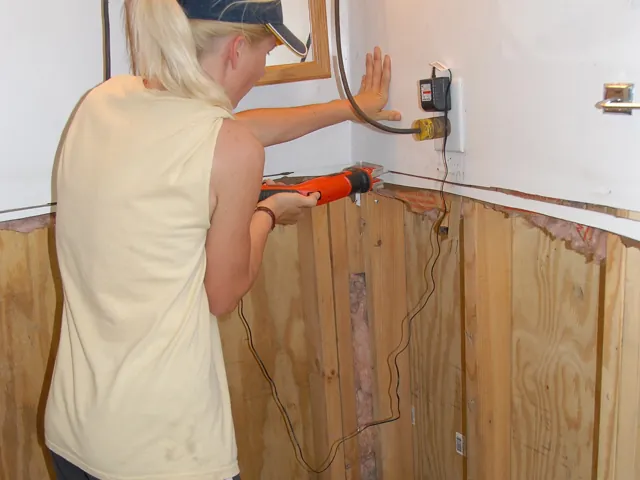
On the first visit, a good crew walks the house with a moisture meter, and often a thermal camera, so they're mapping what's wet instead of guessing. They pull standing water out of carpet and pad, and decide what has to come out. Soaked pad, swollen baseboards and the bottom foot or two of drywall are the usual suspects. Cutting that away lets the wall cavity dry.
Then the equipment goes in. Expect air movers and dehumidifiers running around the clock for about three to five days, longer when cabinets, hardwood or a slab leak are involved. It's loud and it pulls a lot of power. Leave it on. The crew should come back every day or two to take readings and move things around.
Water damage repair is the last part: drywall, texture, paint, baseboards, flooring. Some restoration companies do it themselves and some hand it to a contractor. It often takes longer than the drying, mostly because of insurance approvals and material orders, so ask about the timeline up front.
Who you're actually talking to
We'd rather be straight with you. (602) 652-3550 is a referral line, not a restoration company. We don't send our own crew, because we don't have one.
Your call is connected to an independent restoration company that serves your part of the Valley. That company talks to you, gives you its own estimate, and does the work if you hire it. They pay to receive calls. You pay nothing for the call. More on how it works is on our about page.
Five questions for whoever shows up
- Is the crew IICRC-certified in water damage restoration?
- Do you dry to the IICRC S500 standard?
- Will I get moisture readings in writing for my insurance?
- What's your Arizona ROC license number, and are you insured? (You can look it up on the Registrar of Contractors site in a couple of minutes.)
- Do you bill my insurance company directly?
Fire, mold and biohazard cleanup too
Water is usually where it starts, but it isn't the only mess people call about.
Phoenix ZIP codes we cover
Grouped roughly by part of town. If yours is here, call and we'll connect you with water damage restoration help nearby.
Central, downtown, Arcadia and Biltmore
- 85003
- 85004
- 85006
- 85007
- 85008
- 85012
- 85013
- 85014
- 85015
- 85016
- 85018
- 85026
- 85034
North Phoenix
- 85020
- 85021
- 85022
- 85023
- 85024
- 85028
- 85029
- 85032
- 85050
- 85051
- 85053
- 85054
Deer Valley and far north
- 85027
- 85083
- 85085
- 85086
West Phoenix and Maryvale
- 85009
- 85017
- 85019
- 85031
- 85033
- 85035
- 85037
- 85043
South Mountain, Laveen and Ahwatukee
- 85040
- 85041
- 85042
- 85044
- 85045
- 85048
Nearby cities
We also take calls from Tempe in ZIP codes 85281, 85282, 85283 and 85284.
Common questions
How fast does water damage need to be dried out?
As soon as you can get someone there. Wet drywall, baseboards and carpet pad start to break down within a day or two, and mold can start growing in roughly 24 to 48 hours. Phoenix air is dry, but water trapped behind walls and under flooring doesn't care about the humidity outside.
Can someone come out at night or on a weekend?
Many Valley restoration companies take after-hours emergency calls, but it varies by company and by night. We don't promise a set arrival time. When you're connected, ask the company when they can realistically be there. After a big monsoon storm, when lots of homes are hit at once, waits get longer, so call early.
Will homeowners insurance pay for water damage in Phoenix?
Often it does when the damage is sudden, like a burst supply line or a failed water heater. Slow leaks that went on for months, and outside flood water, are often excluded. Every policy is different, so call your insurer, take photos before anything is moved, and keep receipts.
Can I dry it out myself with fans and a shop vac?
For a small spill of clean water on tile that you caught right away, probably. Once water has soaked into carpet pad, gone under baseboards or into the wall, fans mostly dry the surface and leave moisture inside. And if the water came from a toilet, a drain or outside, don't blow fans across it at all until it has been cleaned.
How can I tell if I have a slab leak?
Common signs are a warm or damp spot on the floor, the sound of running water when everything is off, cracked tile, a water meter that keeps moving with all fixtures off, or a bill that jumps for no reason. A plumber with leak detection gear can confirm it and tell you whether a spot repair or a reroute makes more sense.
Is it safe to stay in the house?
If water reached outlets, the electrical panel or anything plugged in, stay out of that area and shut off power at the breaker if you can do it from a dry spot. Sewage or toilet overflow water is a health risk, so keep kids and pets away from it. A ceiling that is sagging or bulging can come down, so don't stand under it.
Do you charge for the call?
No. Calling this number is free. We are a referral service, not a contractor. The restoration company you are connected with will look at the damage and give you its own estimate before any work starts.
Water shut off? Now call and get someone out to look.
One free call. You talk to a local restoration company and decide from there.