Mold Remediation and Mold Removal in Phoenix, AZ
Phoenix is dry, so mold catches people off guard. It nearly always traces back to water: a slow drip under a sink, an AC drain that keeps overflowing, a swamp cooler, or a monsoon leak nobody noticed. Fix the water and get the moldy material out properly, and it stays gone. We can connect you with a local mold remediation company.
- Free call, no forms to fill out
- You talk to the company first and decide whether to hire them
- Ask any company for its Arizona ROC license before work starts
- Phoenix, Mesa, Scottsdale, Chandler, Gilbert and Tempe
Can mold really grow in Phoenix?
Yes. Outdoor air here is dry most of the year, but mold doesn't need humid air. It needs a damp surface for a day or two. A slow leak inside a wall or under a cabinet gives it that, whatever the weather is doing outside.
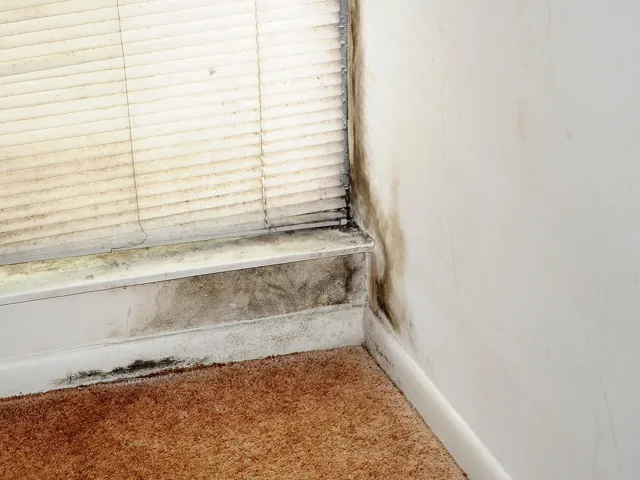
The difference in the desert is that mold tends to hide. In a humid city you'd see it on bathroom ceilings and window frames. Here it's usually tucked behind something: the back of a vanity, inside the wall behind the washer, on the top side of a ceiling under the attic air handler. By the time you see it, it's often been growing for a while.
Where to look in a Phoenix house
If you smell that damp, earthy smell but can't see anything, check these spots first. A flashlight and a few minutes are enough.
| Spot | Why it gets wet | What you'd notice |
|---|---|---|
| Under sinks and behind toilets | A loose compression nut or weeping supply line can drip for months. | Swollen cabinet floor, dark drywall behind it, a smell when you open the door. |
| Around the attic or closet air handler | Condensate lines clog with algae every summer and the pan spills over. | Brown rings on the ceiling below, a musty blast when the AC starts. |
| Under a swamp cooler | Leaky pans and ducts, plus a lot of moist air. Common in older central Phoenix homes. | Stains or soft spots on the ceiling near the cooler vent. |
| Closets on outside walls | Monsoon rain gets in through cracked stucco or around windows, and closets get no airflow. | Spots on the back wall or on stored shoes and bags. |
| A house closed up for summer | AC set high or off, and any small leak runs for months in the heat. | The smell hits you when you open the front door in fall. |
| Bathrooms with no exhaust fan | Plenty of older houses never had one. Daily showers in a closed room add up. | Spots on grout and on the ceiling above the shower. |
Not everything dark is mold. Gray smudges along ceilings and above vents can be soot from candles. White, crusty powder on block walls or concrete is usually efflorescence, which is mineral salt left by water moving through the masonry. It isn't mold, but it does tell you water is getting in.
What does proper mold remediation look like?
Mold remediation is not the same as wiping mold off. A real job keeps the spores from spreading to the rest of the house while the moldy material comes out.
- Find and fix the water source first.
- Seal off the work area with plastic sheeting.
- Run an air scrubber to keep the area under negative pressure.
- Remove moldy drywall, insulation and carpet pad, and bag it inside the containment.
- HEPA vacuum and clean the framing and other surfaces that stay.
- Dry everything to normal moisture levels.
- Check the result, sometimes with a clearance test, before the walls get closed up.
What not to do
- Don't paint over it. It will come through.
- Don't spray bleach on drywall and call it done.
- Don't tear out large moldy areas without containment. You'll spread spores through the house.
- Don't point a fan at it or let the AC blow across it. Moving air carries spores to clean rooms.
- Don't ignore a musty smell just because you can't see anything.
If someone in the house has asthma, allergies or a weak immune system and is feeling worse, talk to a doctor. We can't give medical advice, but it's worth telling them you found mold.
While you wait for the remediation company
- Stop the water if you can, even if that means shutting a valve under the sink and living without it for a day.
- Close the door to the room. If the mold is near the air handler or a return vent, ask whether it makes sense to keep the AC off until someone looks. In summer, that's a judgment call, so don't sit in a 100 degree house.
- Take photos of the mold and the leak before anyone touches them. Your insurer may ask how long it had been going on.
- Keep kids, anyone with breathing problems, and pets out of that room.
- Leave it alone. Scrubbing or pulling off baseboards to have a look is how spores end up all over the house.
Mold testing or mold removal?
Some companies test, some remove, some do both. Arizona doesn't have a separate state mold license, so ask each company what training they hold. IICRC mold remediation certification and following the IICRC S520 standard are good signs. Also ask whether they carry an Arizona ROC license and insurance that covers mold work.
Some people prefer one company for testing and a different one for removal, so nobody is grading their own work. That's a reasonable choice if you can manage it.
Mold usually comes after water
If you have an active leak or recent flooding, deal with that first. Our water damage restoration Phoenix page covers drying, and the fire damage restoration page covers mold risk after firefighting water.
We take mold calls anywhere in our Phoenix ZIP codes, plus Mesa, Scottsdale (lots of seasonal homes that sit closed all summer), Chandler and Gilbert, and Tempe.
Common questions
How much mold is too much to clean myself?
The EPA's general guidance is that an area under about 10 square feet, roughly a 3 by 3 foot patch, may be something a homeowner can handle with care. Anything bigger, anything inside walls or ducts, or any mold after sewage water is a job for professionals.
Do I need a mold test before remediation?
Not always. If you can see mold and you know where the water came from, testing often doesn't change the plan. Testing helps when you smell mold but can't find it, when there are health concerns, or when you want proof the job worked afterward.
Does homeowners insurance cover mold removal?
Usually only when the mold came from a sudden, covered water loss, like a burst pipe that was dealt with quickly. Mold from long-term leaks or humidity is often excluded or capped. Read the mold section of your policy or ask your agent.
Will bleach kill mold on drywall?
Bleach can lighten the stain on the surface, but drywall is porous and the growth goes into the paper and gypsum. The water in bleach can even feed it. Moldy drywall is normally cut out and replaced.
Can mold come back after remediation?
Yes, if the moisture problem isn't fixed. That's why a good remediation job starts by finding and stopping the water. If the AC line keeps overflowing, the mold will be back by next summer.
Seeing or smelling mold? Call and talk it through.
One free call. You talk to a local restoration company and decide from there.